Saturday, April 09, 2011

Sam's Broccoli Based Green Chutney (or dip, or spread)

broccoli
Ever since coming to India 30 years ago, I've been fascinated by the amazing variety in Tamil cuisine - particularly, the chutneys, pachadis, kootus, and thuvayals.

I have only recently become bold enough to experiment with various types of South Indian vegetable purees (chutneys), and the results have surprised me.

As a curious amateur cook, I have been somewhat afraid of trying my hand at any of these as the process seems mysterious, the ingredients myriad and exotic, and most frightening of all, there seems to be no connection between what one starts out with and the finally edifying but unrecognizable product.

Here then is the result of my most recent dabbling...
Broccoli in Tamil is called Pachai Pookose, so this then is Sam's Pachai Pookose Thuvaiyal:

brussels sprouts
THE INGREDIENTS:
Broccoli, a head (~100 g)
Brussels sprouts, 4-5
Onion, 1 medium sized
Coriander leaves, a handful (fresh)
Garlic, 4 cloves
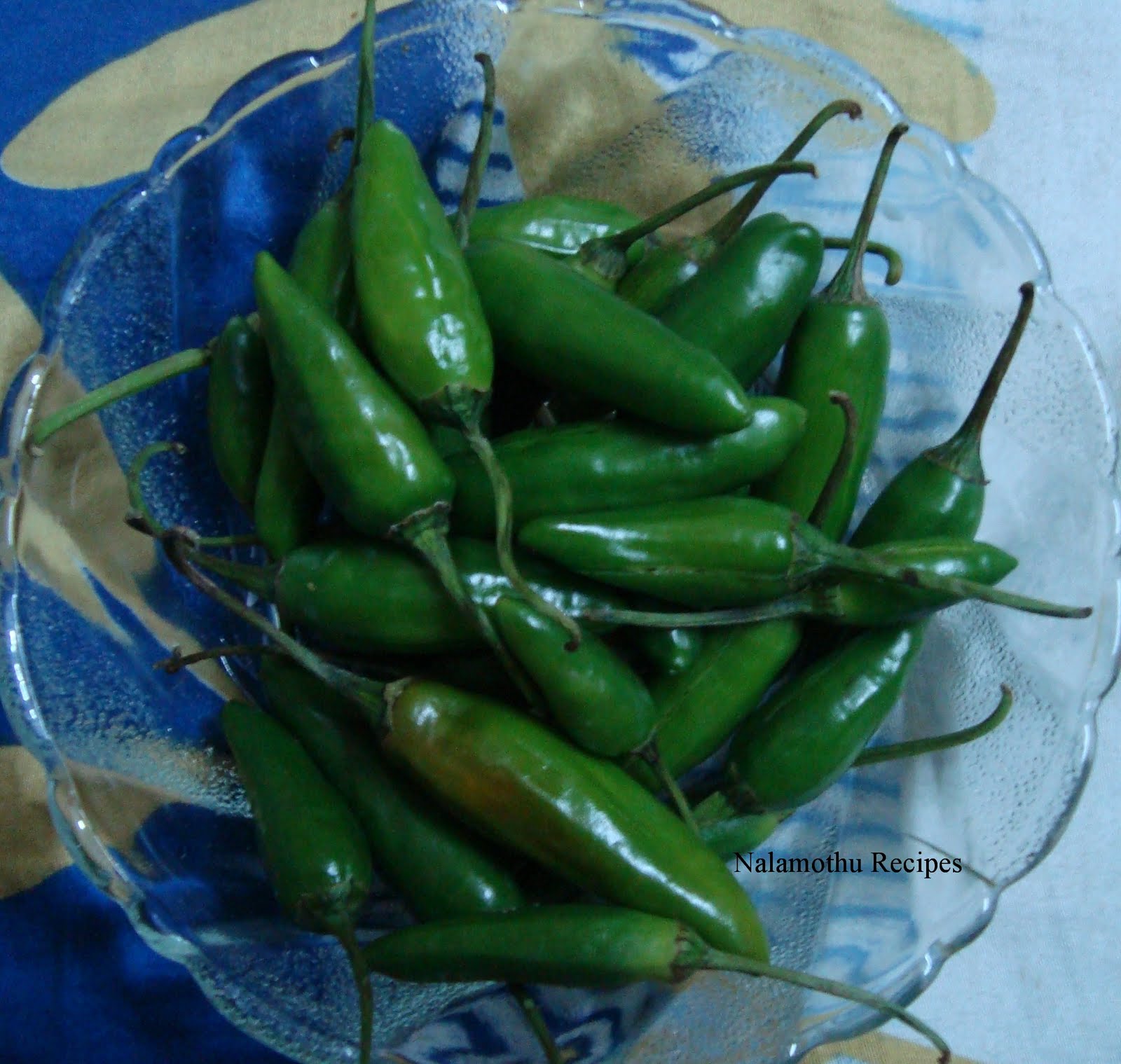
Green chillies, 2-4
Curry leaves (fresh), a handful
Mustard seeds (black), 1/2 teaspoon
Caraway seeds, 1/2 teaspoon (or cumin)
Peppercorns, 6-8
Red chilli  powder, 1/2 teaspoon
Turmeric powder, 1 large pinch
black mustard
Asafoetida powder, 1 small pinch
Sesame seeds (white), 1 teaspoon
Lime, a squeeze (about 1/2 teaspoon)
Indian gooseberry preserved in honey, 2 segments (1 teaspoon)
Oil, 3-4 tablespoons (sesame or rice bran preferred)
Water, 1 cup
Salt to taste.

PREPARATION:
Take the broccoli and divide it up into small segments discarding any thick stems. Cut the brussels sprouts in half. Dice the coriander leaves. Put all these three into a small saucepan, add the 1 cup of water, and bring to a boil. Add a couple of pinches of salt. Once boiling, reduce the flame to a simmer and let cook for about 5 minutes.

caraway seeds
In the meantime, on a cutting board, roughly dice the onion, cut the green chillies in half (discarding the stems), and peel and lightly crush the garlic cloves. Place a large saucepan on the stove and heat the oil.

COOKING IT UP!

Once the oil is fairly hot, throw in the mustard seeds, peppercorns, and caraway seeds. Once the mustard seeds start popping, add the garlic, the green chillies, and the curry leaves, and stir on a medium heat for one minute. Then, toss in the onion and add the turmeric powder, red chilli powder, salt to taste, and asafoetida powder, and stir for another minute.
curry leaves

coriander leaves
Next, add the sesame seeds and again stir for about 30 seconds. By now, the broccoli should have cooked down fairly well but should not have gone dry. Pour the entire contents of the broccoli-brussels sprouts-coriander, with the remaining water, into the still cooking spice mixture. Stir the whole on a medium heat for no more than a minute. Remove from the stove and allow to cool.
green chillies

FINAL TOUCHES:
Once cooled, empty the entire contents into a mixer (blender). Add a small squeeze of lime/lemon juice, and last but not least, the honeyed Indian gooseberry, and frappĂ© the lot. At this stage, after a bit of a mix, I like to sneak a lick or two and make any small adjustments that may be needed, like a dash more salt, or whatever.

This broccoli based chutney can be used as a dip or spread, e.g. its great with boiled broccoli... In Tamil Nadu we usually enjoy this sort of thuvaiyal as the main side dish for our idlis and dosas.

NOTE: Those who have tender tongues may want to reduce the number of green chillies and the amount of red chilli powder. Variations on the theme are usually not disastrous, so feel free to go ahead and experiment!


The final product should look something like this.


It's very rich, chock a block with vitamins and antioxidants, and also, unfortunately, a bit high in triglycerides (but absolutely no cholesterol). If you do have trouble with triglycerides, then reduce the amount of oil!


Acknowledgement: Aruna Carr, my mentor, coach, consultant, and primary guinea pig!

Monday, January 31, 2011

REVOLUTIONS GOOD, BAD, AND UGLY

Democracy is a messy concept and it's a messy reality. In my own time, probably my first proper look at revolution was with what happened seemingly very quietly in Rhodesia in the 70s. School then was in Lusaka, Zambia, a nation that came to be in 1964 at the ailing end of the British Commonwealth 'Empire'. I had friends and schoolmates from Rhodesia. They never invited me to visit, something that was unusual in hospitable Zambia. I'd been to the homes of friends from much farther away, but the Rhodesians respectfully declined. It wasn't till we once almost casually crossed the border (after crossing at Kariba, the  huge dam on the Zambezi river) and came across an inn by the roadside where we decided to stop for a cuppa, and were just entering the drive when dad slammed on the brakes. I looked up and there was a large board that read "whites welcome"  "no entry to coloureds" well that was more than enough for us and we very quickly went back 'home' to Zambia. And, that's when I first started to understand apartheid. It had of course been taught to us in some detail in school, but it isn't untill you come up against the thing itself that the reality starts to sink in. I can't imagine what actually living under this sort of oppression would do to my psyche... Well, of course a revolution was happening at that time, a war of independence was indeed on, and it wasn't very long after that that that regime fell. Zimbabwe was born. Zimbabwe was and is a democratic nation. Unfortunately, it was a nation born of hatred, and the hatred grew and was vented against its own self.  Reverse discrimination became the norm... The rest is recent enough history that you probably are quite familiar with it. Still, it is a democracy isn't it? So, what went wrong?

In between then and now, a newly imperialistic America has decided to dabble in regime change, and they have used 'democracy' or the lack of it, as an excuse to topple those who have fallen into their disfavor. The current US president, who once claimed to be somewhat of a dove, has in practice turned out to be a wolf in sheep's clothing (do follow the TITLE link to an interesting rundown of the present incumbent's recent track record). For one thing he has vastly increased the use of drones to do remote 'assassinations' and in countries where America is supposedly not even militarily engaged. How long will it take for these drones to get fully operational in places like Egypt and Yemen?

Unfortunately, the virus of democracy is not as easily controlled as is 'terrorism'. Regime's and dictators whom the US considered 'friendly' (however despotic), are now suddenly being ousted, and without US military help. I think the Americans have managed to temporarily stave off a similarly huge Yemeni revolt, but they have been a bit too slow to completely protect Egypt's Mubarak. The outcome in Egypt is still far from certain. In Yemen the crackdown was immediate, and the lack of local news agencies has resulted in a vacuum of silence there. Mubarak did call out the tanks, but the people were aroused, and his police seemed to know they were in for it and had temporarily gone underground. The police are now back though, and backed by gun wielding and truncheoned 'supporters' of Mubarak.

I'm sure that all out efforts are on 'behind the scenes' to somehow bring the cries for freedom (and democracy!) under control - and to prevent the virus from spreading to other nearby dictatorships.  I am also quite sure that El Baradei is a marked man. The actual list of dictators that continue to bask in America's favor is much larger and very informative in its own right. With tacit American approval, there exist many that oversee regimes so repressive that revolution will not come easy. Talk of freedom, or of democracy, or of human rights, in any of these places will end you up in jail without trial, or just as likely, dead. I'm thinking in particular of places like Saudi Arabia, and then too most of the '*istans' of Asia.

Stability is the new key word. A world order that should not be shaken up too much, for fear of...well, democracy. People should be free, but not free to be for example 'too conservatively Islamic' in their outlook. I guess the thinking is that somehow Islamic democracy itself is dangerous, and can only be controlled and 'properly channeled' by friendly, hardline (read 'utterly ruthless') dictators.

Some parts of the world are apparently not yet ready for democracy, after all, democracy can really get quite messy, can't it?

The sign at the top is from South Africa, which was also an apartheid state, but the policy as such actually goes right back to the British colonists though it is commonly thought of as only a legacy of the Dutch settlers.  I clearly remember taking a book out from the Lusaka Public library when I was in high school and seeing a sticker on the inside back cover that detailed the rules for the handling of the book including stuff like "if the book is requested by a black or coloured servant on behalf of a white, the servant has to bring the note in a cleft stick", should be provided with a bag in which the librarian can place the book etc. etc. I guess to absolutely ensure that the book was not soiled by being handled by 'coloured' folks. Zambia was never Dutch and had always been a purely British colony.

Update September 2013 On the Egyptian front things have gone from bad to worse and so too in Syria and in Bahrain. Perhaps, Zimbabwe is now in slightly better shape than it was.

Overall, as of end 2013, there seems little chance that 'the will of the people' is going to make any headway. Internationally, the Russians and Chinese are not averse to a little dictatorship/military rule. The Americans and Brits who have (mostly in theory) promoted 'democracy' first dithered and then openly backed down. The UN, well, Ban's UN has been the joker in the bridge pack (i.e. MIA).

An excerpt from the NYT today is telling:  "On Thursday, with much of the world distracted by Syria, the Egyptian generals and the civilian officials they have appointed extended a countrywide state of emergency for two months ... security forces have also begun to round up other dissenters, a chilling warning that no Egyptians should feel safe if they dare to challenge authority. That was not the kind of country that most Egyptians envisioned during the 2011 revolution when they sought democracy and freedom and demanded jobs and education."

For a rundown of all the recent hot news from these hotspots, check out today's A Righter World!

And now, three years down the line, the democratic counterrevolution has been crushed, the Muslim Brotherhood has been jailed and all prodemocracy voices of dissent silenced. Of course, Egypt remains the USA's staunch ally... see

Egypt’s 1984


Thursday, January 21, 2010

The Spirit of SURVIVAL

Follow the title link to an interesting article in today's Guardian. A number of newsreaders have attempted to block this article's rss feed!

Now that's weird but true!


One eye blinded by a U.S. army Guantanamo guard, "renditioned" etc. etc.

Sunday, November 08, 2009

Endangered Wild Red "Dogs" of Mudumalai

On one of our frequent forays into the nearby wilderness areas, three of us set out for a ramble one late afternoon. The area to be explored was a fairly level area of grassy plains and scrub jungle leading up to a low range of forested hills. The area right at the base of the hills was thick scrub jungle and before that to be traversed was a plain of grassland with a few small patches of shola here and there, and with one sharply cut, well wooded nullah, about 50 feet deep and 40 to 50 feet wide at the top, cutting its way through the plain carrying the occasional runoff from the hills.
This nullah is frequently used by herds of elephant coming out of the hills in search of the waters of the perennial Moyar river.
As we hit our stride pretty soon, we made good ground and were soon getting to the end of the plains. There was one last shallow dip ahead of us and as we got to the edge we came to a sudden halt. What had startled us were the patches of red here and there visible through the low undergrowth and dried grasses. Now, any sort of red is a colour that one keeps an eye out for especially in these particular forests where tigers are not that uncommon.
The light had taken on that glowing golden glow that is unique to parts of the Nilgiris. It happens as if by magic in the late mornings and again with a slightly different character in the late afternoons. The uplifting and enveloping feeling of that quality of light is very hard to describe, but it is also fantastic light for photography. It was in this setting that the red patches looked very intriguing. We were still and observant and saw the lookouts in turn raise their heads above the grass to check us out.
Initially I thought it was a small pack of red hunting dogs (sen-nai in Tamil, dhole in hindi) that we had chanced upon. Soon though, we realized that we were seeing a lot more than that and our estimates were of 25 to 30 dogs, which is a very unusually large pack of the asiatic hunting dog (Cuon alpinus) or simply red hunting dogs.This was about 7 years ago. I have been back to the area so many times since but never seen more than one or two and recently even that hasn't happened.
Much misinformation surrounds these fantastic animals. They are without doubt the very best hunters around. It is said that once they start after a prey (spotted dear, sambar, and sometimes even young bison) they do not quit until they succeed. The pack hunt is an incredibly complex and scientific operation with two or three relay groups operating in tandem and communicating with each other through complex whistled signals.  Yet, they are completely harmless to humans and will not even defend their kills from encroaching humans.  The entire pack also cooperates in bringing up the cubs with various members donating regurgitated meat to the fast developing cubs. It therefore requires a pack of at least 6 or 7 individuals to successfully bring the cubs to maturity. We are rarely aware of these wonderful animals as inside the forests as they are such silent movers and very alert to avoid humans.
On another occasion, we had some novices along and with quite a bunch of kids too so, while some of us set out on a longer hike, we sent this 'family group' to a small rock that affords a nice view of the same plain area and is only a couple of kilometers in. This was an early morning walk and as they were about half way there a herd of spotted deer came running right at them. Now, this is very unusual indeed and the forest guide immediately stopped the group. The deer broke right round them and kept going without even a pause. Right behind them came three red dogs in hot pursuit. Seeing the humans, they stopped in their tracks, investigated, and, their hunt spoiled for the day, quietly disappeared.
Wonderful animals, the Indian hunting dog seems to be going the way of the rest of the forests. As we systematically cut our way through our small remaining patches of forest, and as we occupy and 'develop' every bit of the cleared land, all our unique wild animals are disappearing. The 'sen-nai' depends on a plentiful supply of deer to keep their packs going. The same is of course required by leopards and tigers. All three will therefore soon disappear into the archives of the history of humankind's wholesale destruction of nature.

Sunday, October 04, 2009

Thinking of Earthquakes

The word itself is frightening. The reality much, much, more so! Some years ago, with a group of friends from church (All Souls, Coimbatore), we took off to try to lend a hand in the North Indian state of Gujurat where a massive quake had leveled many populous towns. I went along as a blood banker and someone who knows something about lab medicine. The group was organized by Roshan.

We were nine altogether and were led by a double FRCS surgeon (Dr. Thomas Abraham). We didn't all know each other very well when we started out, but that changed.

We worked out of a much cracked (but still standing) Catholic hospital at Gandhidham. Almost every building in this town sported huge cracks and structural damage, but most were still standing. That was frightening enough and we lived in small tents while the hundreds of patients were treated in bigger adjoining tents, all placed well away from the main hospital building - just in case...

Though the hospital still stood, no one (except the very brave surgery teams), wanted to take any chances as there were massive cracks right through the structure. The operating theater was inside, however, and all serious surgery requires that level of sterility, so the surgeons and nurses just went about their business as if all was normal.


After two days settling in and organizing our work at the hospital, we went along with one of the CARE relief teams to some outlying villages, and on the way back paused at the town of Anjar.  Anjar is a populous town and was once densely packed with cheaply constructed houses and shops. The devastation was almost total. it was just one huge mass of rubble. What was even more scary was that it was untouched. The surviving locals, and apparently all the local government too, had fled for their lives. There was absolutely no sign of an attempt at any sort of 'rescue operation'.

We were standing yards away from the spot where hundreds of children on an early morning Republic Day march through the downtown area simply disappeared under tons of rubble. My guess for this town alone would be at least 30,000 dead. Facing Anjar that day, the reality started to sink in. The word 'terrible' had a meaning. Something just turned inside of me. I felt as if my insides had been vacuumed out leaving only a dull aching sense of shame and horror.

But there was mercifully work to do, so we got back and got busy. The recent series of earthquakes in Padang suddenly brought all those memories flooding in. Earthquakes and Tsunamis are terrible things. At least with the Tsunamis (that we have seen) they are one-of events, but earthquakes are not so. There were predictions on the net even in those days that another big one was lurking and could be unleashed in Gujurat at any moment. The reminders were constant. You'd get this sudden feeling of disorientation as everything wobbled. These were the frequent aftershocks, some so gentle that they are hardly noticed, others that made me want to run - but there's nowhere to run to.


The pics are of Anjar. In the one just above, the headless idol marks the spot under which the school children 'disappeared'. 

Pray for the survivors of Padang. Food, clean water, and shelter will all have disappeared. If the quake doesn't get you the chances that serious diseases will is very high. Pray for the relief workers on the ground. They are all at risk and will need to fight off their own fears just to be able to get on with the unbelievably huge tasks that face them.


The aerial view on the right shows the 'downtown' area. Not only had homes and shops been damaged , there wasn't even a sense left of any individual buildings or even of walls...

Friday, August 28, 2009

To Sleep, Perchance To Dream

A good night's sleep has long been known to be of great value for being alert the next day. Lack of sleep has always, right through human history, been associated with irritability i.e. the grumps but NOW, 

there is increasingly strong evidence that sleep also has a BIG effect on all of our health - our hearts, our lungs, and even our stomachs, 
in addition to our minds.

In fact, chronic poor sleep has recently been found to be positively involved with the decline of heart function, increases in blood pressure, loss of lung function, and a whole lot of other bads - see the title link.

Sound sleep includes having all the stages of sleep (N1, N2, and N3) and there should also be a decent amount of dream sleep (REM). One can actually be getting enough time asleep and still not have restful sleep due to poor sleep architecture. When sleep is well balanced and of a sufficient quantity, that alone is considered a 'good, sound sleep.'

Poor sleep habits, insomnia (inability to fall sleep), frequent arousals, and daytime sleepiness, are all different parts of the picture. Sometimes, other things like snoring (a sign of obstruction to free breathing during sleep), full blown sleep apnea, or restless legs can worsen  the problem.

Poor sleep is also frequently clinically associated with depression, fibromyalgia, hyperactivity, ADD, and can even be caused by various medication side effects.

Sleep apnea (stopping of regular breathing during sleep) is unfavorably linked with obesity and can exacerbate health problems for people who are anyways otherwise living on a slippery slope to poor health. When the apneas and hypopneas are severe they can reduce our blood oxygen levels (oxygen saturation) below the normal level. Even during sleep, the O2 saturation should  stay above 90%. Typically when awake and active, healthy people will have saturations of 100% or close to it . When saturations drop below 90% this is bad for all parts of our bodies and minds. We do need a goodly amount of oxygen to keep ourselves alive and healthy!

Irregular sleep patterns due to other causes can wreak havoc with our health. Those who work nights, students cramming for exams, and even worse working 'switch' shifts, are all in very great danger of permanently ruined health. I find it amazing that in so many medical colleges right around the world, students are routinely forced to work/study for 48-72 hours at a stretch. It seems to be some sort of a rite of passage, a 'trial by fire' with a 'throw them in at the deep end' approach. It is both disgusting and unhealthy. Anyone who chooses thus to burn the candle at both ends is asking for trouble.

Another very bad association of disturbed or poor sleep is with GERD (gastric reflux). Stomach acidity tends to get much worse with poor sleep and when strong acids from the stomach come up the esophagus (swallowing tube) we are in real trouble. It can get so bad that the acid makes its way all the way up to our throats and into our tracheas (breathing tubes) causing cough and lung damage. In the worst cases, a person's teeth can get eaten away by wayward stomach acid!


But there's a lot that we can do to help ourselves to sleep better even without medical intervention and especially when our insurance (if we have any) won't cover the expense of sleep studies, CPAPs, and all the potential associated medication. Here are some tips:

  • Have a regular bedtime.
  • Stay away from stimulants like caffeine (tea, coffee, sodas...) and nicotine.
  • All sleep-aid medications (and most antidepressants) alter sleep architecture towards lighter sleep (that's bad), so avoid them as much as possible.
  • Have a good sleep environment. Blue light is especially calming!
  • Don't watch TV for a couple hours before bedtime.
  • Don't eat anything for at least two hours before bedtime.
  • If you have GERD (acid reflux)  make sure it is well treated, especially before bedtime.
  • Keep your mind relaxed, particularly after dinner. Identify your stressors and deal with them appropriately (a little advice that Hamlet could have used...). Having a blank mind isn't possible for most of us, and no one really knows if that will help one to sleep, but certainly we can identify activities that we find relaxing and concentrate on doing those -  especially after dinner.
  • Try to sleep on your side or stomach as much as possible.
  • Raise the head of your bed by about 6 inches, this will help to keep your acids in the stomach - where they belong.
  • Get out for an early morning walk and make sure that you absorb a solid dose of the early morning sun. The bright light 'sets' your in-built hormonal sleep scheduler and it will help you to feel sleepy at the right time at night.
  • Never, NEVER, drive or operate machinery when you are feeling sleepy!

If you kick a lot, snore heavily, or it's been noticed that you seem to stop breathing while asleep (as, being asleep, you may not have noticed, so try asking your spouse, parents, siblings, kids, or room mates), and when you regularly suffer from excessive daytime sleepiness, lack of alertness, or waking up feeling unrested, then you probably do need to consult a sleep expert. Strangely enough, that's also probably your lung doctor (pulmonologist)!

Eventually, doing a sleep study (polysomnopgraphy) will help to sort out all your doubts -  if you can afford it! Of course, we would want to exhaust all other options first, but for some folks it probably really would help...

We are such stuff
As dreams are made on; and our little life
Is rounded with a sleep.

 Prospero in "The Tempest"

Sam L. Carr

Thursday, April 23, 2009

Slave or Free? Independence, Dependence & Interdependence

Musing on the self’s necessary embeddedness-in-its-context, Jon Erdman, over at his Theos Project blog, has a fascinating post woven around the quintessential jazz quartets/quintets of the early nineteen sixties, and the experience of fantastic music from the likes of John Coltrane and Miles Davis and their troupes (search out some very choice live concerts on YouTube). On stage, each of the performers is an artiste of rare excellence, yet they meld together so spontaneously and effortlessly in their virtuosity that it is a wonder to behold – and the resulting music is something much more than the sum of its parts – shear magic. So what is this? How does it work? Pure individualism is an important basic component, but isn’t there also the magic of real codependence?

The ‘West’ (perhaps especially America) has lauded the values of freedom and independence as supreme.Western culture now extols these as the purest and most fundamental of human ideals – at least in theory. Western culture gears up to provide each individual with the greatest possible degree of freedom and independence.Economically, what that boils down to is ‘free enterprise’, while politically, the only way to go is pure democracy. Individuals, then, who make up the society, cooperate only by choice, and never of necessity. Of course, we are often left with a lingering suspicion that these 'ideals' may be more of a marketing gimmick than really real...

In the East, while we have been bombarded with these Western values and cultural norms, yet we are still very much ensconced in a completely different milieu. Our culture always covertly calls the shots. Family and societal needs always take precedence over individual likes, desires, goals, and even thought.

Certainly, some sort of a challenge has been thrown down on the part of freedom and independence by the ubiquitous Western oriented media, but how far has it gotten and where do we now stand? Are we Easterners now setting out to become ruggedly independent individuals? Perhaps, in some peoples mind’s, being freedom loving, democratically oriented, and independent, is theoretically possible. Perhaps, there is even an individualistic façade, a persona, trying to creep into our collective consciousness. But, in all key instances, when we dig a little deeper, we do find that it is merely a pretence, if not even a posturing, and one that is evident only on the surface.

Out in the world, our youth may appear to be momentarily confused about the possibilities of individuality and selfhood, but on arrival at home from high school or college, the dream quietly fades away. Culture and family are all that surrounds one, effortlessly sucking you in, and you are once again comfortably enveloped in that familiar territory of duty and belonging. Oneness of mind is not at all a matter of choice, it is the unquestioned necessity for survival and the ground of every one’s very identity.

Whatever be the future of our culture wars, in one small way democracy does threaten to drive a tiny wedge into our so far impregnable melding pot. Exercising one’s vote is a uniquely private event. However much discussion on politics, or the nation’s needs, may precede, the casting of that one vote is sacrosanct; it will not be intruded upon. Few are the opportunities to be a real individual in Eastern societies, but here in India, the vote is the one unique thing that DEMANDS your independence and underscores your constitutionally guaranteed freedom.

Don’t throw it away by failing to exercise your franchise.

In this coming election, and whenever again the opportunity arises - PLEASE VOTE!!!

Sunday, January 18, 2009

The AUSTERITY CODE & POWER

In hard times, it's suddenly not so hard to think of ourselves shampooing the dogs, or washing and waxing our own car(s), or steam cleaning our own carpets, or doing some home wiring/plumbing, or even packing lunch to work and eschewing the Big Mac, or whatever. Perhaps instead of tossing out that pant, a little unobtrusive patchwork might not be amiss? In hard times, DIY becomes the order of the day. Outsourcing is just out, even when that means that we are going to lose some comforts and lose some of our now not so precious time.

All of this, and more, could be thought of as cost cutting. Budgeting, and budgeting, and stretching that cash to make ends somehow meet, and staying off those deadly little credit cards...

The other side of the coin is that all of a sudden, the few rupees or dollars in one's pocket take on a new power. Our economies survive, as they are, only because we earn and then we spend. When the spending drops, businesses have to figure out ways to again separate us from that cash.

Influencing what you will choose to do becomes the most important question that other businesses must find an answer to in order to crack the AUSTERITY CODE. If you still have a job, or a viable business, you have in your hands power, real power. What you are still willing to spend money on will do well, and whatever you avoid has to die.

Of course, this has in fact always been true. The thing is that in easier times we just don't notice. Keeping up with the Krishnans is so much easier when we are not feeling the pinch.

Subliminally, but effectively, advertisers are able to convince us that we just can't live without X or Y or Z, the cost really doesn't matter, but to make us feel a real sense of achievement, the bargain of the century is always there to be had, just don't miss THIS chance, AND with an unbelievably low EMI to boot!

The real power of the consumer - that's you - is that the economy cannot do without you. But, that doesn't mean that you are obligated to spend in any way except how you decide is best.

You may get to vote once in a couple of years but you do get to exercise a much more powerful economic (and hence even political) power with every single note that you pull out of your pocket.

Think about it. Think about it a lot, and start exercising your power, Now, and Forever.

Monday, January 12, 2009

Humankind, God, and the NEW CREATION

A Blogworld friend, author, psychologist, and deep thinker, John Doyle has been following a trajectory of thought based on his own reading of some of Paul's (of New Testament fame) thinking. This is remarkable not least because John happens to be somewhere in the atheist/agnostic camp.

On his famous blog "Ktismatics", John has done a whole series of posts on the concept of the "new creation" in some of Paul's epistles. The entire series of posts begins here and there is an index to the the whole series at the end of this post.

In commenting on one of those posts I had made the following statement -

“I’m sure that there are not ‘many’ gods or even more than one, but I’m equally sure that for humankind there have to be many gods even when we think there are none.”

- and John then invited me (perhaps in jest) to expand on the thought.

I admit to having been in a bit of a hurry and dashing that off without giving it sufficient (or even much) thought. Still, though crude, I can stand by the statement and try here to elaborate on the thought.

It's my own belief statement. I believe that God 'exists' i.e. is real. I don't think that the one that I have come to recognise as God is more than one but I could easily be wrong on that call.

The second half of my assertion is more difficult. Each of us is an individual and we know individually.

In an important sense my friend John Doyle is not the same as your friend John Doyle even when we are physically referring to the same person. I'm therefore sure, in my own pigheaded fashion that when I refer to Jesus that is not the same as when you do or when someone else does.

On a broader front, and perhaps more controversially, I think it is also possible that when someone refers to Shirdi Sai Baba they may in fact be thinking of the same one that I know as Jesus.

In fact, to broaden it out even further, it is possible that a person could be an atheist and still 'know' God...and that is not to say that God is not particular!

What do you think?


The New Creation in Paul: Galatians 6
The New Creation in Paul: 2 Corinthians 5
The New Man in Ephesians 2
The New Man in Ephesians 4
Doppelganger Theory in Colossians 3 and Romans 6
The New Creation in Paul - Summary Observations
The Return of the Ktismatically Repressed


Tuesday, November 25, 2008

The Going Gets TOUGH

Billions have been lost by the 'know it all' big bosses of politics, finance, and industry. Those billions won't bother you now as much as that tiny bit of the pie that suddenly went down the drain and that was all that you had to lose!

Getting into the inviting rut of worrying about what you could possibly have done different is now not going to help. What's gone is probably irretrievably gone. If anything does eventually get salvaged that will be far too late to solve today's problems. So, rather than decry the current state of affairs, we'd all better get practical and start doing what needs to be done.

My first suggestion is: GET BASIC!

The core areas of our economies will survive even the very worst economic disaster and will also be the first to pick up after everything bottoms out.

My second suggestion is THINK FREE!
As one of my heroes remarked "I suppose it is tempting, if the only tool you have is a hammer, to treat everything as if it were a nail." (A. Maslow)

So, get lateral, jump out of that box, roundcan the mental straitjacket, and start to use those noodles to good effect.

and Finally: Be GENEROUS.

Thursday, July 24, 2008

Wars, Deaths and Selfishness in World Politics

This month's New England Journal of Medicine (NEJM) carries a free full text of correspondence related to two widely divergent estimates of post-invasion violent deaths in Iraq. The debate in itself is about statistics and stuff but the shocking fact is that the lowest estimate of non-combat violent deaths in the civilian population is 150,000 while the more realistic estimate (still on the conservative side) is 600,000!

Saddam Hussein in his worst avataram, is considered over a tenure of 24 years (1979-2003), to have been responsible for no more than 50,000 deaths per year. Post ouster that rate has climbed to at least double and probably even much more.

Should we not certainly be worried when hundreds of thousands of people die?

One of my major questions is was it worth it? I really don't know how to answer this question. America repeatedly claims that they simply had to get rid of a psychopathic butcher, but then the butchery after his removal seems to have got that much worse!

On another front look at what has been happening in Sudan's Darfur region. The toll there is conservatively estimated to be around a half million with a couple of million who have been turned into refugees and are always on the brink of starving to death or of being massacred in their UN/AU 'protected' refugee camps.

The striking similarity in both these horribly deadly disasters is the oil. Black gold. In both cases we see greed for control of oil revenues spilling over into ethnic-racial conflicts and terrible destruction of human lives. Entire peoples are being wiped out. Oil is not evil in and of itself. What it boils down to is greed. Greed alone is not enough, it is those who have power and who get greedy who then utilise ethnic hatred and use that as a propaganda weapon to justify and inflame their wars on innocents.

Saddam fell into the trap twice, first with Iran and then with Kuwait. In between he took a few swipes at the Kurds. I don't think that there is much doubt that in both wars, Saddam was lured into being the point person for others, who subsequently dropped him like a hot potato when the going got tough. But then that's just par for the course in the world of Realpolitik.

Do we have to search very hard for the reasons for other disaster zones like Zimbabwe or Myanmar? On the surface, NO, yet my overactive suspiciousness always makes me wonder who is duping whom to get what? It always seems that one of those with real power in this world sits and meddles in the background to actively but furtively create a situation out of which will fall windfall profits and increasing power and influence on the world stage.

Greed, power and the death of innocents...

Sunday, May 18, 2008

On the Branding of Swadeshi

India's economy is in crisis. Inflation has raised its ugly head. Even our huge new middle class is in trouble. The poor may sink completely. Our greatest immediate difficulty is that those most essential of commodities - staple foods and fuel - are seeing the fastest rising rates.

At the same time, complexity takes hold of our economic, political, religious, and cultural fronts. Yet we are being sold a strange brew of oversimplifications. It's the cost of development, they say; or, reform is always painful and so costly to implement...

There is a deliberate bid to reduce the political fallout by confusing the issues. Great and somewhat relentless forces have silently been unleashed in our nation. Though we can see the evil clearly in our neighbors' experiences, we are blinded to our own inability to see ourselves as we really are.

Strategically and with global implications, the restoration of democracy in Pakistan, the sidelining of 'Mushy' Musharraf, and the now more hidden face of the military oligarchy there, coupled with the fallout of the 'war on terror' on Pakistan's border with Afghanistan, has led the US, Britain, and the EU to seek much closer ties with India.

We see the rise of the West in India most clearly in the fields of defense and retail. More subtle signs include the red carpet welcome to Western based MNCs, as well as a deliberate (but silent) turning away from the independence theme of Swadeshi that formed the economic backbone of Mahatma Gandhi's freedom movement.

It is not just one Indian national party that has changed their tune to welcome the latest trend to global capitalistic hegemony. Both our leading political blocks - the Congress led UPA, and the BJP led NDA, are openly shedding nonalignment for Western goodies.

Just a couple of small examples show how far we have come since our 'non-aligned' days of standing tall for freedom. On the one hand our politicians try to convince us that our economic and defense needs dictate our strengthening trade with the West and even with Israel. On the other hand, we are not willing to accept desperately needed gas from Iran. Iran's policy of seeking nuclear self-sufficiency (as we too had done) apparently now offends our Realpolitik and the necessity of pandering to the American foreign policy. We feel safer as American dependents - now how strange is that?.

I think the biggest blind spot that we have is our fear of China. There is no logic to this fear. Any rational analysis would show that closer ties between these two economies promise huge benefits for both sides. It is an economic alliance that the West justly fears. All sorts of pressure has been brought on our politicos to increase the alienation, and our brave leaders have succumbed. There is no logic, but after all an immediate need in the depths of their pockets.

No similar 'pots of gold' await any deal with Iran. While our nation may benefit immensely from the low cost of sorely needed Iranian gas, and we continue to surreptitiously buy Iran's oil, this pales in comparison to the loss of secret revenues from those neoglobalists who want to call the shots for us.

As Mahatma Gandhi knew, when there is no Swadesh there can be no Swaraj. Yet we no longer care for the Mahatma's advice.

Swadeshi is also prominently missing in agriculture. The obvious result is that while the prices of basic foods skyrocket, the traditional farmer gets poorer and poorer. Those that benefit directly, and immensely, are the stockists and 'middle men' - now a misnomer in itself for this niche has been fully occupied by MNC minions. It almost seems as though our political bosses are aching to replace the myriad millions of traditional farmers with mega farms controlled by a few choice corporate houses.

The new breed of MNC linked trading house can stock (it used to be called 'hoard') and therefore exercise empty 'value addition' with impunity. They sell at self-created demand peaks in connivance with a government that will authorize exports of commodities that are in short supply. The obfuscation is most clearly visible when the government blames 'global' factors including that wonderful commodity, crude oil. The recent global spike up in the prices of commodities should actually have absolutely no impact on domestic prices when our own agricultural production is more than self sufficient! The same goes for cooking oil where retail prices at one stage rose by more than 50% over just a six month period!

Meanwhile, the farmers starve, fail to pay their debts, and commit suicide. We face a drought this year with the failure of the SW monsoons. And on the sidelines await the ever-eager property speculators, who are just waiting to pick up excellent farmland at distress sale prices, to hand over to the cash-rich agri-corps, who are also circling hungrily above. Once the carcass has been picked clean, we Indians who earn only a tenth of what the West averages, will yet pay the full 'global' price at par for our own commodities. Paying such a price to our existing farmers seems not to be an option. No, we will wait for the corporates to make the killing!

As Gandhiji remarked so many years ago, "Swadeshi is that spirit in us which requires us to serve our immediate neighbours before others, and to use things produced in our neighbourhood in preference to those more remote. So doing, we serve humanity to the best of our capacity. We cannot serve humanity by neglecting our neighbours"

And further and more pointedly, Swadeshi is "a call to the consumer to be aware of the violence he is causing by supporting those industries that result in poverty, harm to workers and to humans and other creatures"

The  maha atma Gandhiji came, and he did more than his bit to rescue us from our coils of slavery. There is no sense in yearning for him to come again. The only ones who can save us from our (oh so 'Gandhian') politicians, are ourselves. Right now we have only ourselves to blame for not calling our politicians to account. It is high time for our youth to rise and discover the true power of the ballot, voting for persons who are not so bent on first taking care of lining their own pockets. But that is only the beginning.

We must find ways to hold our politicos to account, to demand that they lead well and honestly, and to demand that they have a vision for humanity, for the India that can be built up by a committed and caring India.

Monday, May 12, 2008

Course in MT designed for College Students

AN exciting new course on medical transcription designed for college students in Coimbatore has been announced at Phoenix & Ahead

I am really excited about the possibilities. I will be handling the Language of Medicine (LOM) and in whatever other ways that I can. The Phoenix center is beautifully designed with a ThinCLient networked Lab and a separate dedicated classroom with all the infrastructure in place.

It looks to be an eight month stretch (by sacrificing all of one's weekends) and any college student should be able to earn a certificate in Medical Transcription.

There are obvious synergies for students as their command of English will automatically get polished and that's a huge plus for getting through any of the competitive entrance exams (GRE, GATE, CAT, CEE or TOEFL ...).

Furthermore, as I myself am a witness, being able to do MT as a transcriptionist or editor is a tremendous boon in any financial tight spot - and we all know that students and young people generally will face plenty of those!

Sunday, May 04, 2008

How free is FREE?

I have been mulling over the latest political brouhaha in the US primary race. I think it's symbolic of how shallow the US's purported commitment to freedom really is.

Senators Obama and Clinton are locked in a 'fight to the death' in the democratic primaries. Into the midst of this melee springs a surprise (Obama machine) monkey wrench, the Wright Wrench. Now, suddenly, Obama turns tail and runs for cover, rebuking his overzealous ex-pastor and in the final analysis losing (in my unAmerican opinion) his perceived moral edge over his eagerly expectant rival.

The politics of the situation is rather comic. Whoever wins will be a 'historic' candidate in remarkable ways. So, I am not overly exercised by the potential outcome. Past experience has taught me never to be overly optimistic in these matters, for Americans generally seem more enamoured of the more caddish candidate and have always voted these known bad apples in for a second term and with their eyes wide open too.

What does interest me is the shallowness of the meaning of 'freedom' for Americans. One is welcome to be free, it seems, as long as that freedom does not extend to criticizing anything American. America is always good. America is always right. American foreign policy is always eminently fair... Any dissent is unAmerican. Any dissenter is a traitor. You are free only to believe and espouse one American truth.

One need not agree with a Wright, or for that matter with a Ward Churchill ("little Eichmanns" title link), or even a Farrakhan, or with anyone who refuses to wear a flag lapel pin... But, if one believes in freedom, if one really believes in freedom, one has to respect the dissenter and the dissenter's right to dissent.

At one time it was traitorous and unBritish for the erstwhile colonists to speak out against their God-appointed king. The dissent on which a potentially great democracy was founded was enshrined in the American Constitution's main text and then specifically spelled out in the very justly famous "First Amendment". It is a fundamental human right to be free to disagree!

One would think that being a member of a church where a pastor dares to speak what he sees as the truth, should be a big plus point for a presidential candidate. Here is someone who says that they admire the person and agree with some of what that person stands for and yet recognises that person's fundamental right to hold views that are unpopular.

Ask yourself: Is agreement necessary for acceptance? Does unpopular = unAmerican? I also wonder, does criticism of America mean less love for America, or even less patriotism?

If I were a psychoanalyst, I might even wonder whether such obvious displays of hypersensitivity may not be symptomatic of some under-the-surface feelings of GUILT?

Sunday, March 23, 2008

ECLECTIC YOUTH

I find that today's youth has a really eclectic taste in music. Here's a playlist that has some of Saranya's (19) and Rommel's (15) slowly growing/constantly evolving pile of Good Stuff:


Find our Christmas songs HERE and my own 'a bit of hard rock etc.' Here...

SHARE THIS NOW

Google+ javascript:(function(){var now=new Date(),month=now.getMonth()+1;day=now.getDate();year=now.getFullYear();window.polarbear=window.polarbear||{};var D=550,A=450,C=screen.height,B=screen.width,H=Math.round((B/2)-(D/2)),G=0,F=document,E;if(C>A){G=Math.round((C/2)-(A/2))}window.polarbear.shareWin=window.open('https://www.polarbearapp.com/app','','left='+H+',top='+G+',width='+D+',height='+A+',personalbar=0,toolbar=0,scrollbars=1,resizable=1');E=F.createElement('script');E.src='//www.polarbearapp.com/js/web-bookmarklet.js?v='+month+'-'+day+'-'+year;F.getElementsByTagName('head')[0].appendChild(E)}());