Wednesday, September 28, 2011

Blood in Times of Scarcity

grey-platelets, top is a lymphocyte (white cell)
We have all known times when we, or some loved one, needed blood and we could not get it. The reasons may be numerous. Perhaps the blood needed is of a rare blood group, or perhaps there are no real blood 'banks' nearby! Often times in developing nations the supply mechanisms are just not in place or not functioning. Then there's the ubiquitous shortage of blood donors!

Blood bankers are the people on the spot when blood has been prescribed for a patient but apparently the blood is not available. What do you do?

Fortunately, nature itself has given us a few 'tricks' that can prove useful in times of crisis! The first and foremost trick is to use the component parts of blood to treat specific needs. As mentioned in my previous post, blood component use can expand the utility of a limited resource (blood and blood donors) to provide help to 3 or 4 times as many patients. Especially in times of scarcity that's a huge, huge advantage!

harvesting PRP
Nature's boon to us is that "blood" (meaning 'whole' blood), can easily be divided up into its parts, or components. A simple centrifuge spin will show two clear divisions, with straw yellow watery plasma on top (less dense) and the dark red cells below. Using multiple bags, the plasma can be removed into a satellite bag. If we have spun the blood gently, then within the plasma will be found the platelets. Platelets can then be concentrated with a slightly harder spin yielding platelet poor plasma (PPP) on top and the platelet concentrate at the bottom. So now we have three components of blood. Very rarely do people need more than one of these at a time. Voila, 1 blood donor can help to treat 3 patients!

The plasma (PPP) with its clotting factors can be fast frozen (now called  "Fresh Frozen Plasma" or FFP) and then stored at -40C for up to one year. All the clotting factors will work!

Sometimes, we will choose to remove some of the clotting factors (V and VIII with fibrinogen) from the plasma and use these separately for treating people like hemophilia sufferers. And there we have it, easily up to 4 different patients can be benefited from one blood donation!

Nature also lends us a helping hand for patients with rarer blood groups (e.g. often rh negative blood and AB group blood can be hard to find as occurring in only a small percentage of donors). The basic 4 blood groups (A, B, AB & O) were discovered more than a century ago. Rh factors were detected in the 1940s-1950s and were first found from studying problematic pregnancies. Thus, the rh 'problem' for rh negative women has become a matter of common knowledge. Now, a whole science of blood group serology has grown out of these humble beginnings!

When we make blood components we first separate the plasma from the red cells. Here lies nature's second BIG gift to us. Factors like rh and A and B that are the basis of the blood groups, are found ONLY on the red blood cells. These factors do not exist in the plasma. What is found in the plasma, are plasma proteins (immunoglobulins) that can potentially attack their opposite red cell factors. We are born with some of these proteins (anti A and anti B, but not rh). People with a blood group A, for example, will have the A factor on their red cells BUT their plasma will have anti B. It is a bit difficult to understand at first but the tables below summarize the antigen factors (red cell) and antibodies (plasma) for the ABO groups.

So, how does this help?
Well, supposing your patient needs AB group blood (red cells) and you cannot find a blood donor of AB group, it's actually generally just as safe safe to transfuse (crossmatch compatible) washed A group, B group or even O group RED CELLS alone to this patient!!!

Simply put, whatever is on the patient's red cells - the corresponding antibodies in the plasma must be avoided. An A group patient can receive O or A group red cells safely but NOT B or AB.

Again the table below will clarify the mixes and matches for red cells (packed red cells as they are often called) and for plasma.  The reverse case is therefore true for patients needing plasma! Consider the last column of the same table to decide on plasma compatibility: As you can see, an A group patient can receive A or AB plasma, NOT B or O.


Patient’s Blood Group
Compatible Components
Packed Red Cells, Platelet Concentrate
Plasma
A
A, O
A, AB
B
B, O
B, AB
AB
A, B, AB, O
Only AB
O
Only O
A, B, AB, O

Cell counters VERY important for PLT
For people needing whole blood, with a little immagination you can see that the combination of O group red cells and AB plasma are always acceptable (when the crossmatch is okay)! Other combinations will work too, e.g. an A group patient needing whole blood can have O or A red cells along with A or AB plasma.

A huge advantage of component separation is that when we fresh freeze plasma we can store large quantities of plasma to be used whenever needed! 'Packed' red cells can be safely stored for 35 to 42 days at +4C, and in fact with some extra technology (and cost) red cells can even be viably held at -80C (or in liquid nitrogen) for very long periods (up to 5 years).

The science of blood group serology has taught us that there are well over 300 different antigen factors found on red blood cells and (in other patients) corresponding antibodies found in plasma. Most of these are rare, but any active transfusion service will run into 1 or 2 a week. It is for these rarer cases that larger transfusion services will freeze and store away the rare donor red cells that come their way so that when a patient presents with a troublesome rare antibody, there is a better likelihood that compatible frozen red cells will save a life.  And that is another reason why crossmatch techniques have to be the best possible! You will not pick up any of these dangerous transfusions (or 'rare' donors) unless the crossmatching is always spot on! But we are now speaking of rarer difficulties (often 1:10,000 or rarer).

PLT concentrates in a horizontal shaker, temperature +22C
But, some more common problems that we face are also amenable to some 'trick' solutions! Take the case of a patient with low platelet counts who has started to bleed. The commonest causes might be a virus such as dengue, a drug (medication) reaction, or perhaps treatment for cancer. Whatever the case, platelets once needed are needed in some quantities, say 2-4 random donor platelet concentrates every 12 hours (the actual need will be decided by the physician and the clinical condition).

Finding donors can get especially difficult when the patient has a rarer blood group such as AB or rh negative. One unit of  Platelet Concentrate has about 50 to 70 mL of plasma but it also will contain a small amount of red cells, say 1 or 2 mL, and that's the reason for generally transfusing platelets according to 'red cell rules'. That small amount of red cells is enough to stimulate the production of antibodies like anti rh. Still, in a pinch, for MALE patients with life threatening bleeding, the physician may go ahead and transfuse blood group incompatible (but major crossmatch compatible) platelet concentrates.

Centrifuging blood in blood bags.
Where rh negative WOMEN patients are concerned, it gets complicated. Sometines women who have not had children have been found with rh antibody due to careless transfusions, pregnancies in the past, or other exposures to rh antigens. Still, a potential way out here is to use RhoGAM (which is nothing other than rh antibody) to bind the few problem-causing rh positive red cells found in platelet concentrates. In other words, we can do what we would do when an rh negative women is pregnant to prevent her own immune system from producing the rh antibody against the red cells from her fetus that may be crossing into her circulation!

Of course, the above are all purely medical decisions and only doctors can decide in each case what can and should be done. The blood banker's job is to make the solutions available to the physicians.

And as you can see, with sensible blood component technology backed with simple blood serology techniques, MUCH indeed can be done.  MOST IMPORTANTLY our blood needs can mainly be met using simple, ready to hand, inexpensive "third world ready" technologies.

The PRP on the left top has too many red cells (pink). QC is a must!
Blood bankers should always fine tune their crossmatch techniques to ensure that dangerous transfusions are avoided.

Building Confidence

Quality control is most critical in building physicians' confidence in your blood component program. The components, especially the very sensitive platelets, should have high enough counts in our PLT concentrates. We should aim to harvest 90% of the platelets from the donor blood into each concentrate and with the least contamination of red cells possible. The platelets should of course be viable, so gently spin out and gently agitate during storage while maintaining strict temperature control at +22C.

As the physicians' confidence grow, and as they see their difficult transfusion problems being solved with component technology and common sense, you will find that they will soon switch over to prescribing only blood components!

Manual Apheresis versus Automated Apheresis

Finally, a word on manual apheresis (much much less expensive) versus automated apheresis. I know that a significant amount of controversy was generated by my earlier post recommending manual apheresis in 3rd world countries, with some doubts even being expressed about the safety of the procedure. In India it is standard procedure at leading medical/hematology centers such as CMC Vellore. I refer the doubters to 2 out of many studies that have been published in leading transfusion medicine journals that prove that manual apheresis platelets are as safe (or safer) than those made with very fancy (& expensive!) automated equipment: See Vox Sang. 1989;57(1):25-8.In vitro and in vivo comparison of platelet concentrates collected by automated versus manual apheresis. Ross DG, Holme S, Heaton WA.Source American Red Cross Blood Services, Tidewater Region, Norfolk, Va.  &  Viability of platelets collected by apheresis versus the platelet-rich plasma technique: a direct comparison.by R A De Vries, M De Bruin, J J Marx, H C Hart, A Van De Wiel Transfusion Science (1993) Volume: 14, Issue: 4, Pages: 391-398  PubMed: 10146646 Available from www.ncbi.nlm.nih.gov

BLOOD COMPONENT SUMMARY:
RED CELLS (packed red cells PRBC) 180 mL to 200 mL, ~80% cells, <10% plasma, ~15% anticoagulant-additive (storage at +4C up to 42 days).
FRESH FROZEN PLASMA (FFP) 200 to 220 mL plasma, 30 mL anticoagulant, < <0 -40c="" .5="" 1="" at="" cells="" p="" red="" storage="" to="" up="" year="">PLATELET CONCENTRATE (PLT) 50 to 70 mL plasma, each 1 mL typically contains  120,000,000 platelets, and a minimum of 5.5 x 10 (10) in 50 to 70 mL of plasma with less than 1 mL red cells. (storage at +22C with gentle agitation for 5 days). For an average adult patient of 70 kg weight, the 'normal' blood volume would be 5 liters, and one unit of platelet concentrate should raise the count by ~ 10,000/microliter.


BLOOD COMPONENTS ARE A MATTER OF LIFE! 

NOTES:
1. Please do keep in mind that platelets once opened for transfusion cannot be stored. They should never be refrigerated even for short periods of time. Only +22C storage! If you use a part of a PLT concentrate, say for an infant, please discard the remainder and do not attempt to keep this for later use as the risk of bacterial contamination is extremely high! Once transfused, the platelets will usually take some time, a few hours, to equilibrate and start working to stop bleeding - an important point when preparing a patient for surgery!
2. A good antibody screen can be sometimes substituted for, or added to the crossmatch to make it even safer.
3. The standard amount of blood drawn for component preparation is usually 450 mL
4. I have not mentioned autologous blood transfusion here as this post is not really about blood for elective procedures, BUT the overall demand on donors for a transfusion center/blood bank will somewhat reduce if surgeons are also utilizing prior autologous transfusions.
5. A good read on the dengue epidemic in the Lahore area,  Dingi (Dengue) Fever in Lahore by Prof Farakh A. Khan It is very down to earth, see: http://networkedblogs.com/nE6gF
6. The Merck Manual has a useful summary of blood component use in clinical practice -  http://www.merckmanuals.com/professional/hematology_and_oncology/transfusion_medicine/blood_products.html
7. Be proactive and prepared! Find the phone numbers of the blood banks in your area (the ones that have stock of blood components) and store them up in your mobile for instant use. In an emergency, getting blood components fast can save lives.
8. Blood donors can encourage their blood banks to process blood into components. Ask your blood banker the next time you donate blood, whether they are routinely making blood components so that each time you donate, you will help to save 3 or even 4 lives.

Incidentally, I am a blood bank technical consultant and not a medical doctor. I will be happy to discuss the technical aspects of blood/blood components with anyone, but for medical advice please talk to your physician! You can mail me with any questions at samlcarr@gmail.com or call me, +91-8144068393

Sunday, September 18, 2011

Platelets in Developing Countries

Blood saves lives BUT wrong responses to blood needs are horribly wasteful, even criminally wasteful, and especially so in developing nations where the tech may not even work.

My present concern was ignited by a recent bit of news from Pakistan that the government was responding to the #DENGUE crisis (an epidemic affecting many thousands) in populous Lahore.  Like many viruses that cause bleeding, dengue can be most deadly in its hemorrhagic form, and the main cause of bleeding comes down to dropping platelet counts - and platelets are blood components that are the body's first line of defense against bleeds. The government proposes tossing out 40,000,000 (40 million!) rupees to purchase top-of-the-line blood cell separators as the cries for platelets from dengue sufferers have grown to a crescendo.

Sounds good, doesn't it! People desperately need platelets, so the government immediately jumps into action to meet that need... Well, unfortunately that's all it does is to 'sound' good!

And thats how complicated the 10k apheresis kit is!
In the first place, the machines themselves are very expensive. Perhaps the government will be able to buy a couple dozen machines for that money. But what's really very sad, such machines do not work at all on their own. You need to use 1 disposable kit for each donation. EACH platelet concentrate from one donor (single donor platelets or SDP) requires a (single use) kit and EACH kit costs anywhere from 10,000 to 20,000 Pak Rupees.

And that my friends, means that only the richest patients will be able to afford this treatment. In short, eventually, the government would have spent your public's tax money on a bunch of utterly useless machinery.

Being a blood banker, I also know that the time to implementation for blood cell separator tech is approximately a minimum of 3 months, so even supposing the government does something really brave, like subsidizing the cost of the kits, the whole setup will only go into action after the dengue is  long gone...
After 1 spin PRP above RBC

Of course, the spin-doctors might leave the public admiring the government's caring responsiveness, but ultimately the same thousands WILL DIE for lack of platelets.

Oh, I am not even going to harp much on the fact that properly using these machines requires a LOT of training, with a heck of a lot of infrastructure. These machines will not function safely on generators, and so will need large UPS backup. Then, doctors need to be trained in how to prescribe these SDP, which is a whole lot different from using the commonly available (random donor) platelet concentrate! And then there's the little practicalities like maintaining and servicing some very sophisticated machinery. In my experience, when asked to do after sales service, the sellers/manufacturers/agents found in 3rd world nations are so often adept at playing hard to get!

In other words, stuff like this is simply not appropriate for 3rd world economies. It is a simple thing to have blood cell separators (US 'apheresis' machines) as standard equipment for any US/European/Japanese blood transfusion service, but in those economies our 10,000 rupees is just $110, what an American might spend dining out just once, while to a Pakistani or an Indian that's one month's wages, and for just 1 day's treatment with SDP.

harvesting the platelet rich plasma
I also hardly need to remind folks that in all the 'fancy' countries there's insurance cover, or the governments there treat even their citizens' tertiary health problems with nationalized free treatment - and which developing nations can afford to do either of those things???

Now, I can't altogether blame the government for this fiasco. But then I can! It is typically the health ministry's responsibility to get proper advice from genuine experts and find workable and effective solutions to emergencies like the present dengue/platelet crisis. Solutions do so often exist; workable solutions, and much less expensive ones!

What would have been a more effective solution in Lahore? Encourage the existing network of blood banks in Pakistan to coordinate the supply of 'ordinary' platelet concentrates. Here, the technology is simple. Many blood banks will already have the centrifuges, and "triple bag" kits are readily available at very reasonable prices. It's also easy to train the technicians to make 'ordinary' platelet concentrate. Best of all, the end user cost is only a mere Rs 300/- to 500/- per platelet concentrate, of which a doctor may need to use just 1 or 2 every 12 hours to maintain the platelet count in a safe range, i.e. a cost to the patient of Rs 1,000 to 2,000 per day, (that's still expensive) to stay safely alive until the self-limiting dengue virus hopefully makes a quiet exit.

We, in third world countries, are often witness to much of such government over-enthusiasm. And it often enough isn't the result of stupidity, is it?  So very often we find that some extra-smart 'expert' government adviser somewhere has quietly pocketed a hefty commission (kickback/baksheesh) for suggesting a brilliant but useless scheme!

But, at what cost to the nation, and particularly at the cost of how many lives?


And so, to end the sermon, do try to work with locally effective technology rather than doing stuff that will only be a donation to some foreign manufacturer of completely useless-to-you white elephants. Think about it.

In the meantime, I would also urge all blood bankers to really, really, switch to blood components. Of course, you will not be able to do that unless physicians and surgeons start insisting on using only blood components! Coordinate - Educate!

So called 'whole' blood is a killer when used to treat drops in platelet counts. Whole blood can dangerously load the circulation as you are putting in an extra 350 mL of blood (and completely unneeded red cells lead to hemoconcentration) to get an effect equal to the platelets found in just 50 to 70 mL of platelet concentrate.
I've personally witnessed volume overloads  and very high hematocrits resulting from such whole blood mistransfusions that literally killed patients!

I would simultaneously urge all blood donors to request their blood banks to collect blood in multiple bags so that blood component processing becomes simple and safe. If you see just a single bag without 'satellite bags' attached, go ahead and donate, but then go and meet the blood bank director and tell that person that you will feel much more motivated to be a regular donor if they quickly move to blood components - BECAUSE, your one blood donation (made into components) can serve 3 to 4 patients, and is in any case always safer and more effective than 'whole' blood!

Wouldn't you want to save many precious lives each time you donate your precious blood? I certainly do...

P.S. Blood Components : From 1 unit (450 mL) of 'whole' blood = Red Cells (180 mL) + Fresh Frozen Plasma (200 mL) + Platelet Concentrate (max 70 mL). Sometimes the plasma can further be split to provide clotting factor VIII concentrate and plain plasma (without this clotting factor). So, 1 blood donation made into it's components can help save at least 3 lives or even more!


PLATELET STORAGE & TRANSPORT
The platelets in 'whole' blood get killed when the blood temperature drops below +20 C. Whole blood is typically stored at +4 C. So unless the 'whole' blood is fresh and uncooled, it's totally useless for platelets anyway! However, once platelet concentrate is made from fresh warm blood, it is good for at least 5 days at +22 C, so can also be transported to from central processing units to wherever the demand exists. Platelets need to be maintained at this temperature of +22 C and be gently agitated.

PLATELET DONORS:
Should have a healthy platelet count. Should not have any bleeding disorder. Should not have smoked, taken aspirin or Aggrenox for at least 48 hours, or any antiplatelet meds like Plavix (clopidogrel) for 10 days before donation and of course should meet the other general requirements for blood donation (minimum height-weight etc.).

* Pics on the left show parts of the 'low' tech processing of blood manually to get the blood components safely out and this is all done within a closed sterile blood bag system. The triple bag is most commonly used to provide the 3 main blood components.

Monday, April 18, 2011

GLORIOUS CREATION


The Mountain from Terje Sorgjerd on Vimeo.


Watch this time-lapse with some awesome footage from the Canary Islands and of the Milky Way at night...

Thursday, April 14, 2011

What's In A NAME - Biodiversity vs Global Warming

"Tis but thy name that is my enemy" says Juliet to Romeo, and as it turns out, she's right, while Romeo ('that which we call a rose by any other name...') is dead wrong.

A LOT of people know what 'Global Warming' or 'Climate Change' is all about. At the same time, very few people have a clue that such a thing as 'biodiversity' even exists.

Not surprisingly, the percentage of people that have never heard of biodiversity is over 30% of a well educated population - the English.

I think it's a tragedy. Both GW (or 'climate change') and BD are important concepts. Both signify huge changes that are taking place right now on our planet.

But, to my mind, the impact of loss of biodiversity is a much, much bigger problem. Certainly more dangerous in the short term, and yet it is the area where individual humans can make an immediate change.

 With GW, while the awareness is good, and individuals can and should try to do their bit, the forces at work really do require global action. Individuals can have little direct impact.

On the popular level, it turns out that fully 30% of the respondents to the recent DEFRA survey thought “there is nothing I can do personally to help protect the UK's biodiversity.”


Looking locally, in India what we do deservedly see getting huge publicity, is the loss of our tigers. And that IS certainly of great importance. 

But, have you ever considered that we are concentrating on the species that sits at the very top spot of a huge ecological pyramid?   The land, the plants, the herbivores, the insects, the germs - entire ecosystems consisting of hundreds of thousands of individual species have to function perfectly and together to allow even a single tiger to survive in the wild. 

And we are blind to the loss of all these stepping stone species. 

It is mind boggling to imagine, but we are losing our biodiversity.

As we lose our biodiversity, so we will also lose our tigers... and it's not only the tigers we will lose!

The LOSS of biodiversity (and that's four words to describe a phenomenon) is so, so deadly. It's happening right now, all around you. But before we will start to do something about it, we need to understand and acknowledge that it is REAL.

Yet, sillily enough, I do wish there were a ONE WORD name for this phenomenon.

I really believe that a better name for biodiversity, something catchier, simpler to remember, unique, and meaningful, will make a huge difference to the amount of awareness. The fight to save the world's BD is of the utmost importance.

Please lend a hand, let's rename this thorny rose, let's start winning back our biodiversity - before it is too late - and we end up with only this...


P.S. I've tried BIOINVERSITY and that only adds to the confusion. Then there's ECOCIDE, but that seems too broad... so, what'll it be? 

You can do better, start now, find a word, or create one, and the whole world and all the creatures that now still inhabit this world will thank you!

A quick link via @greenroofsuk (Dusty Gedge) Michael McCarthy in the Independent "Nature Studies: Our generation has seen a great thinning that we can’t quite name" 
http://www.independent.co.uk/voices/comment/nature-studies-our-generation-has-seen-a-great-thinning-that-we-cant-quite-name-8426019.html

And if you have any doubts at all about the Earth now undergoing the sixth mass extinction in its history – the first since the cataclysm that wiped out the dinosaurs some 65 million years ago, then please read:


http://www.project-syndicate.org/commentary/mass-extinction-human-cause-by-paul-r--ehrlich-and-anne-h--ehrlich-2015-08#vGlkvtRrX1vHKDjW.99  
http://bit.ly/1TyiNRe


Saturday, April 09, 2011

Sam's Broccoli Based Green Chutney (or dip, or spread)

broccoli
Ever since coming to India 30 years ago, I've been fascinated by the amazing variety in Tamil cuisine - particularly, the chutneys, pachadis, kootus, and thuvayals.

I have only recently become bold enough to experiment with various types of South Indian vegetable purees (chutneys), and the results have surprised me.

As a curious amateur cook, I have been somewhat afraid of trying my hand at any of these as the process seems mysterious, the ingredients myriad and exotic, and most frightening of all, there seems to be no connection between what one starts out with and the finally edifying but unrecognizable product.

Here then is the result of my most recent dabbling...
Broccoli in Tamil is called Pachai Pookose, so this then is Sam's Pachai Pookose Thuvaiyal:

brussels sprouts
THE INGREDIENTS:
Broccoli, a head (~100 g)
Brussels sprouts, 4-5
Onion, 1 medium sized
Coriander leaves, a handful (fresh)
Garlic, 4 cloves
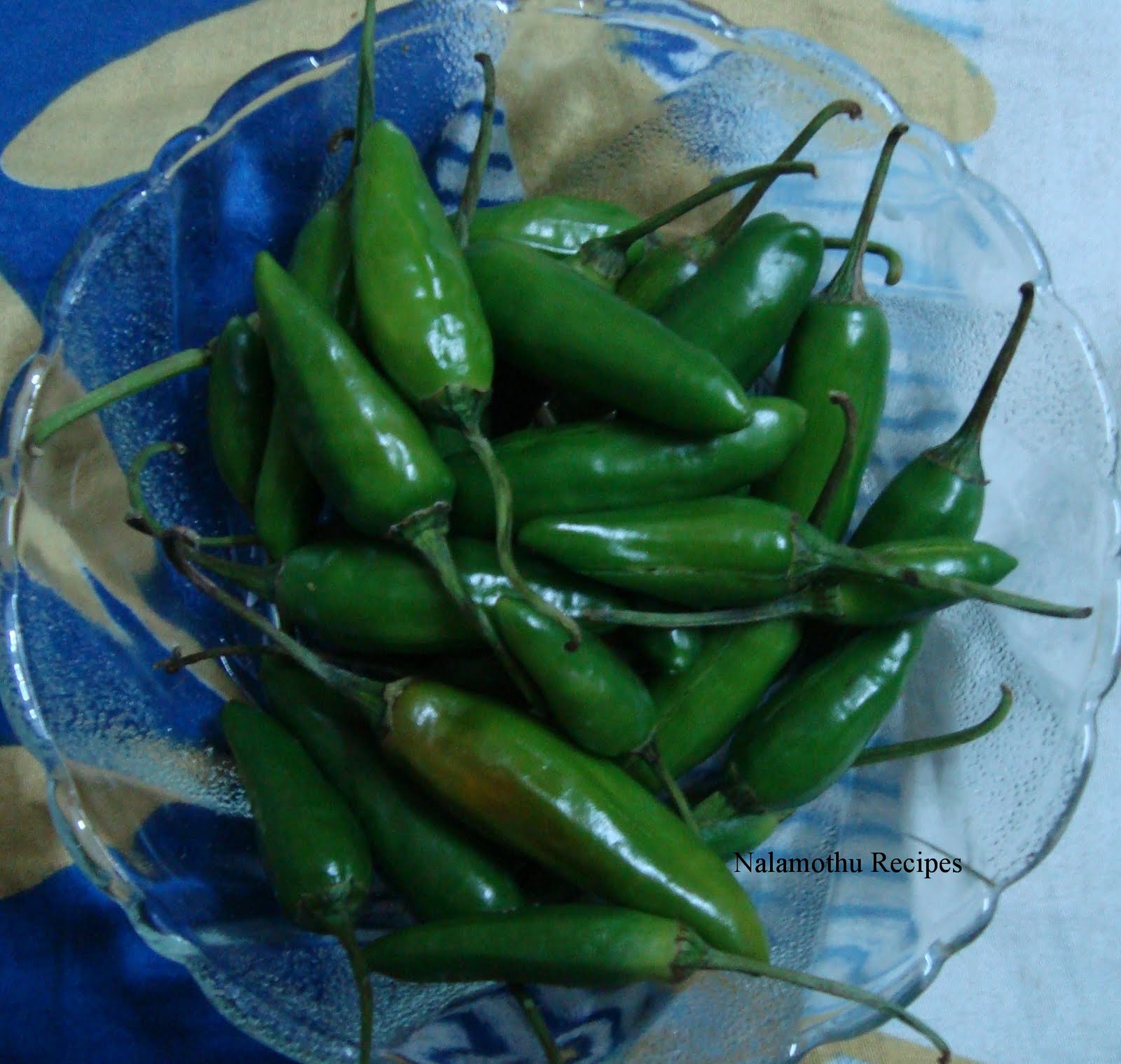
Green chillies, 2-4
Curry leaves (fresh), a handful
Mustard seeds (black), 1/2 teaspoon
Caraway seeds, 1/2 teaspoon (or cumin)
Peppercorns, 6-8
Red chilli  powder, 1/2 teaspoon
Turmeric powder, 1 large pinch
black mustard
Asafoetida powder, 1 small pinch
Sesame seeds (white), 1 teaspoon
Lime, a squeeze (about 1/2 teaspoon)
Indian gooseberry preserved in honey, 2 segments (1 teaspoon)
Oil, 3-4 tablespoons (sesame or rice bran preferred)
Water, 1 cup
Salt to taste.

PREPARATION:
Take the broccoli and divide it up into small segments discarding any thick stems. Cut the brussels sprouts in half. Dice the coriander leaves. Put all these three into a small saucepan, add the 1 cup of water, and bring to a boil. Add a couple of pinches of salt. Once boiling, reduce the flame to a simmer and let cook for about 5 minutes.

caraway seeds
In the meantime, on a cutting board, roughly dice the onion, cut the green chillies in half (discarding the stems), and peel and lightly crush the garlic cloves. Place a large saucepan on the stove and heat the oil.

COOKING IT UP!

Once the oil is fairly hot, throw in the mustard seeds, peppercorns, and caraway seeds. Once the mustard seeds start popping, add the garlic, the green chillies, and the curry leaves, and stir on a medium heat for one minute. Then, toss in the onion and add the turmeric powder, red chilli powder, salt to taste, and asafoetida powder, and stir for another minute.
curry leaves

coriander leaves
Next, add the sesame seeds and again stir for about 30 seconds. By now, the broccoli should have cooked down fairly well but should not have gone dry. Pour the entire contents of the broccoli-brussels sprouts-coriander, with the remaining water, into the still cooking spice mixture. Stir the whole on a medium heat for no more than a minute. Remove from the stove and allow to cool.
green chillies

FINAL TOUCHES:
Once cooled, empty the entire contents into a mixer (blender). Add a small squeeze of lime/lemon juice, and last but not least, the honeyed Indian gooseberry, and frappé the lot. At this stage, after a bit of a mix, I like to sneak a lick or two and make any small adjustments that may be needed, like a dash more salt, or whatever.

This broccoli based chutney can be used as a dip or spread, e.g. its great with boiled broccoli... In Tamil Nadu we usually enjoy this sort of thuvaiyal as the main side dish for our idlis and dosas.

NOTE: Those who have tender tongues may want to reduce the number of green chillies and the amount of red chilli powder. Variations on the theme are usually not disastrous, so feel free to go ahead and experiment!


The final product should look something like this.


It's very rich, chock a block with vitamins and antioxidants, and also, unfortunately, a bit high in triglycerides (but absolutely no cholesterol). If you do have trouble with triglycerides, then reduce the amount of oil!


Acknowledgement: Aruna Carr, my mentor, coach, consultant, and primary guinea pig!

Monday, January 31, 2011

REVOLUTIONS GOOD, BAD, AND UGLY

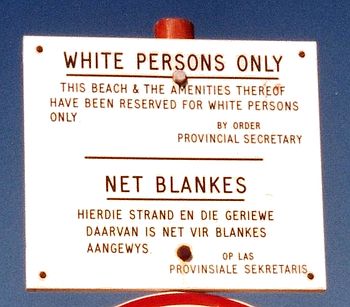
Democracy is a messy concept and it's a messy reality. In my own time, probably my first proper look at revolution was with what happened seemingly very quietly in Rhodesia in the 70s. School then was in Lusaka, Zambia, a nation that came to be in 1964 at the ailing end of the British Commonwealth 'Empire'. I had friends and schoolmates from Rhodesia. They never invited me to visit, something that was unusual in hospitable Zambia. I'd been to the homes of friends from much farther away, but the Rhodesians respectfully declined. It wasn't till we once almost casually crossed the border (after crossing at Kariba, the  huge dam on the Zambezi river) and came across an inn by the roadside where we decided to stop for a cuppa, and were just entering the drive when dad slammed on the brakes. I looked up and there was a large board that read "whites welcome"  "no entry to coloureds" well that was more than enough for us and we very quickly went back 'home' to Zambia. And, that's when I first started to understand apartheid. It had of course been taught to us in some detail in school, but it isn't untill you come up against the thing itself that the reality starts to sink in. I can't imagine what actually living under this sort of oppression would do to my psyche... Well, of course a revolution was happening at that time, a war of independence was indeed on, and it wasn't very long after that that that regime fell. Zimbabwe was born. Zimbabwe was and is a democratic nation. Unfortunately, it was a nation born of hatred, and the hatred grew and was vented against its own self.  Reverse discrimination became the norm... The rest is recent enough history that you probably are quite familiar with it. Still, it is a democracy isn't it? So, what went wrong?

In between then and now, a newly imperialistic America has decided to dabble in regime change, and they have used 'democracy' or the lack of it, as an excuse to topple those who have fallen into their disfavor. The current US president, who once claimed to be somewhat of a dove, has in practice turned out to be a wolf in sheep's clothing (do follow the TITLE link to an interesting rundown of the present incumbent's recent track record). For one thing he has vastly increased the use of drones to do remote 'assassinations' and in countries where America is supposedly not even militarily engaged. How long will it take for these drones to get fully operational in places like Egypt and Yemen?

Unfortunately, the virus of democracy is not as easily controlled as is 'terrorism'. Regime's and dictators whom the US considered 'friendly' (however despotic), are now suddenly being ousted, and without US military help. I think the Americans have managed to temporarily stave off a similarly huge Yemeni revolt, but they have been a bit too slow to completely protect Egypt's Mubarak. The outcome in Egypt is still far from certain. In Yemen the crackdown was immediate, and the lack of local news agencies has resulted in a vacuum of silence there. Mubarak did call out the tanks, but the people were aroused, and his police seemed to know they were in for it and had temporarily gone underground. The police are now back though, and backed by gun wielding and truncheoned 'supporters' of Mubarak.

I'm sure that all out efforts are on 'behind the scenes' to somehow bring the cries for freedom (and democracy!) under control - and to prevent the virus from spreading to other nearby dictatorships.  I am also quite sure that El Baradei is a marked man. The actual list of dictators that continue to bask in America's favor is much larger and very informative in its own right. With tacit American approval, there exist many that oversee regimes so repressive that revolution will not come easy. Talk of freedom, or of democracy, or of human rights, in any of these places will end you up in jail without trial, or just as likely, dead. I'm thinking in particular of places like Saudi Arabia, and then too most of the '*istans' of Asia.

Stability is the new key word. A world order that should not be shaken up too much, for fear of...well, democracy. People should be free, but not free to be for example 'too conservatively Islamic' in their outlook. I guess the thinking is that somehow Islamic democracy itself is dangerous, and can only be controlled and 'properly channeled' by friendly, hardline (read 'utterly ruthless') dictators.

Some parts of the world are apparently not yet ready for democracy, after all, democracy can really get quite messy, can't it?

The sign at the top is from South Africa, which was also an apartheid state, but the policy as such actually goes right back to the British colonists though it is commonly thought of as only a legacy of the Dutch settlers.  I clearly remember taking a book out from the Lusaka Public library when I was in high school and seeing a sticker on the inside back cover that detailed the rules for the handling of the book including stuff like "if the book is requested by a black or coloured servant on behalf of a white, the servant has to bring the note in a cleft stick", should be provided with a bag in which the librarian can place the book etc. etc. I guess to absolutely ensure that the book was not soiled by being handled by 'coloured' folks. Zambia was never Dutch and had always been a purely British colony.

Update September 2013 On the Egyptian front things have gone from bad to worse and so too in Syria and in Bahrain. Perhaps, Zimbabwe is now in slightly better shape than it was.

Overall, as of end 2013, there seems little chance that 'the will of the people' is going to make any headway. Internationally, the Russians and Chinese are not averse to a little dictatorship/military rule. The Americans and Brits who have (mostly in theory) promoted 'democracy' first dithered and then openly backed down. The UN, well, Ban's UN has been the joker in the bridge pack (i.e. MIA).

An excerpt from the NYT today is telling:  "On Thursday, with much of the world distracted by Syria, the Egyptian generals and the civilian officials they have appointed extended a countrywide state of emergency for two months ... security forces have also begun to round up other dissenters, a chilling warning that no Egyptians should feel safe if they dare to challenge authority. That was not the kind of country that most Egyptians envisioned during the 2011 revolution when they sought democracy and freedom and demanded jobs and education."

For a rundown of all the recent hot news from these hotspots, check out today's A Righter World!

And now, three years down the line, the democratic counterrevolution has been crushed, the Muslim Brotherhood has been jailed and all prodemocracy voices of dissent silenced. Of course, Egypt remains the USA's staunch ally... see

Egypt’s 1984


Thursday, January 21, 2010

The Spirit of SURVIVAL

Follow the title link to an interesting article in today's Guardian. A number of newsreaders have attempted to block this article's rss feed!

Now that's weird but true!


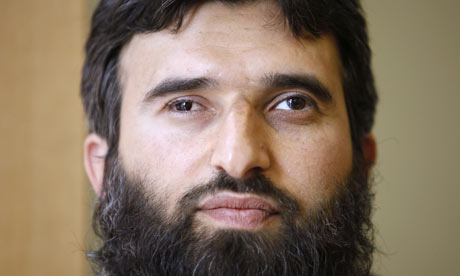
One eye blinded by a U.S. army Guantanamo guard, "renditioned" etc. etc.

Sunday, November 08, 2009

Endangered Wild Red "Dogs" of Mudumalai

On one of our frequent forays into the nearby wilderness areas, three of us set out for a ramble one late afternoon. The area to be explored was a fairly level area of grassy plains and scrub jungle leading up to a low range of forested hills. The area right at the base of the hills was thick scrub jungle and before that to be traversed was a plain of grassland with a few small patches of shola here and there, and with one sharply cut, well wooded nullah, about 50 feet deep and 40 to 50 feet wide at the top, cutting its way through the plain carrying the occasional runoff from the hills.
This nullah is frequently used by herds of elephant coming out of the hills in search of the waters of the perennial Moyar river.
As we hit our stride pretty soon, we made good ground and were soon getting to the end of the plains. There was one last shallow dip ahead of us and as we got to the edge we came to a sudden halt. What had startled us were the patches of red here and there visible through the low undergrowth and dried grasses. Now, any sort of red is a colour that one keeps an eye out for especially in these particular forests where tigers are not that uncommon.
The light had taken on that glowing golden glow that is unique to parts of the Nilgiris. It happens as if by magic in the late mornings and again with a slightly different character in the late afternoons. The uplifting and enveloping feeling of that quality of light is very hard to describe, but it is also fantastic light for photography. It was in this setting that the red patches looked very intriguing. We were still and observant and saw the lookouts in turn raise their heads above the grass to check us out.
Initially I thought it was a small pack of red hunting dogs (sen-nai in Tamil, dhole in hindi) that we had chanced upon. Soon though, we realized that we were seeing a lot more than that and our estimates were of 25 to 30 dogs, which is a very unusually large pack of the asiatic hunting dog (Cuon alpinus) or simply red hunting dogs.This was about 7 years ago. I have been back to the area so many times since but never seen more than one or two and recently even that hasn't happened.
Much misinformation surrounds these fantastic animals. They are without doubt the very best hunters around. It is said that once they start after a prey (spotted dear, sambar, and sometimes even young bison) they do not quit until they succeed. The pack hunt is an incredibly complex and scientific operation with two or three relay groups operating in tandem and communicating with each other through complex whistled signals.  Yet, they are completely harmless to humans and will not even defend their kills from encroaching humans.  The entire pack also cooperates in bringing up the cubs with various members donating regurgitated meat to the fast developing cubs. It therefore requires a pack of at least 6 or 7 individuals to successfully bring the cubs to maturity. We are rarely aware of these wonderful animals as inside the forests as they are such silent movers and very alert to avoid humans.
On another occasion, we had some novices along and with quite a bunch of kids too so, while some of us set out on a longer hike, we sent this 'family group' to a small rock that affords a nice view of the same plain area and is only a couple of kilometers in. This was an early morning walk and as they were about half way there a herd of spotted deer came running right at them. Now, this is very unusual indeed and the forest guide immediately stopped the group. The deer broke right round them and kept going without even a pause. Right behind them came three red dogs in hot pursuit. Seeing the humans, they stopped in their tracks, investigated, and, their hunt spoiled for the day, quietly disappeared.
Wonderful animals, the Indian hunting dog seems to be going the way of the rest of the forests. As we systematically cut our way through our small remaining patches of forest, and as we occupy and 'develop' every bit of the cleared land, all our unique wild animals are disappearing. The 'sen-nai' depends on a plentiful supply of deer to keep their packs going. The same is of course required by leopards and tigers. All three will therefore soon disappear into the archives of the history of humankind's wholesale destruction of nature.

Sunday, October 04, 2009

Thinking of Earthquakes

The word itself is frightening. The reality much, much, more so! Some years ago, with a group of friends from church (All Souls, Coimbatore), we took off to try to lend a hand in the North Indian state of Gujurat where a massive quake had leveled many populous towns. I went along as a blood banker and someone who knows something about lab medicine. The group was organized by Roshan.

We were nine altogether and were led by a double FRCS surgeon (Dr. Thomas Abraham). We didn't all know each other very well when we started out, but that changed.

We worked out of a much cracked (but still standing) Catholic hospital at Gandhidham. Almost every building in this town sported huge cracks and structural damage, but most were still standing. That was frightening enough and we lived in small tents while the hundreds of patients were treated in bigger adjoining tents, all placed well away from the main hospital building - just in case...

Though the hospital still stood, no one (except the very brave surgery teams), wanted to take any chances as there were massive cracks right through the structure. The operating theater was inside, however, and all serious surgery requires that level of sterility, so the surgeons and nurses just went about their business as if all was normal.


After two days settling in and organizing our work at the hospital, we went along with one of the CARE relief teams to some outlying villages, and on the way back paused at the town of Anjar.  Anjar is a populous town and was once densely packed with cheaply constructed houses and shops. The devastation was almost total. it was just one huge mass of rubble. What was even more scary was that it was untouched. The surviving locals, and apparently all the local government too, had fled for their lives. There was absolutely no sign of an attempt at any sort of 'rescue operation'.

We were standing yards away from the spot where hundreds of children on an early morning Republic Day march through the downtown area simply disappeared under tons of rubble. My guess for this town alone would be at least 30,000 dead. Facing Anjar that day, the reality started to sink in. The word 'terrible' had a meaning. Something just turned inside of me. I felt as if my insides had been vacuumed out leaving only a dull aching sense of shame and horror.

But there was mercifully work to do, so we got back and got busy. The recent series of earthquakes in Padang suddenly brought all those memories flooding in. Earthquakes and Tsunamis are terrible things. At least with the Tsunamis (that we have seen) they are one-of events, but earthquakes are not so. There were predictions on the net even in those days that another big one was lurking and could be unleashed in Gujurat at any moment. The reminders were constant. You'd get this sudden feeling of disorientation as everything wobbled. These were the frequent aftershocks, some so gentle that they are hardly noticed, others that made me want to run - but there's nowhere to run to.


The pics are of Anjar. In the one just above, the headless idol marks the spot under which the school children 'disappeared'. 

Pray for the survivors of Padang. Food, clean water, and shelter will all have disappeared. If the quake doesn't get you the chances that serious diseases will is very high. Pray for the relief workers on the ground. They are all at risk and will need to fight off their own fears just to be able to get on with the unbelievably huge tasks that face them.


The aerial view on the right shows the 'downtown' area. Not only had homes and shops been damaged , there wasn't even a sense left of any individual buildings or even of walls...

Friday, August 28, 2009

To Sleep, Perchance To Dream

A good night's sleep has long been known to be of great value for being alert the next day. Lack of sleep has always, right through human history, been associated with irritability i.e. the grumps but NOW, 

there is increasingly strong evidence that sleep also has a BIG effect on all of our health - our hearts, our lungs, and even our stomachs, 
in addition to our minds.

In fact, chronic poor sleep has recently been found to be positively involved with the decline of heart function, increases in blood pressure, loss of lung function, and a whole lot of other bads - see the title link.

Sound sleep includes having all the stages of sleep (N1, N2, and N3) and there should also be a decent amount of dream sleep (REM). One can actually be getting enough time asleep and still not have restful sleep due to poor sleep architecture. When sleep is well balanced and of a sufficient quantity, that alone is considered a 'good, sound sleep.'

Poor sleep habits, insomnia (inability to fall sleep), frequent arousals, and daytime sleepiness, are all different parts of the picture. Sometimes, other things like snoring (a sign of obstruction to free breathing during sleep), full blown sleep apnea, or restless legs can worsen  the problem.

Poor sleep is also frequently clinically associated with depression, fibromyalgia, hyperactivity, ADD, and can even be caused by various medication side effects.

Sleep apnea (stopping of regular breathing during sleep) is unfavorably linked with obesity and can exacerbate health problems for people who are anyways otherwise living on a slippery slope to poor health. When the apneas and hypopneas are severe they can reduce our blood oxygen levels (oxygen saturation) below the normal level. Even during sleep, the O2 saturation should  stay above 90%. Typically when awake and active, healthy people will have saturations of 100% or close to it . When saturations drop below 90% this is bad for all parts of our bodies and minds. We do need a goodly amount of oxygen to keep ourselves alive and healthy!

Irregular sleep patterns due to other causes can wreak havoc with our health. Those who work nights, students cramming for exams, and even worse working 'switch' shifts, are all in very great danger of permanently ruined health. I find it amazing that in so many medical colleges right around the world, students are routinely forced to work/study for 48-72 hours at a stretch. It seems to be some sort of a rite of passage, a 'trial by fire' with a 'throw them in at the deep end' approach. It is both disgusting and unhealthy. Anyone who chooses thus to burn the candle at both ends is asking for trouble.

Another very bad association of disturbed or poor sleep is with GERD (gastric reflux). Stomach acidity tends to get much worse with poor sleep and when strong acids from the stomach come up the esophagus (swallowing tube) we are in real trouble. It can get so bad that the acid makes its way all the way up to our throats and into our tracheas (breathing tubes) causing cough and lung damage. In the worst cases, a person's teeth can get eaten away by wayward stomach acid!


But there's a lot that we can do to help ourselves to sleep better even without medical intervention and especially when our insurance (if we have any) won't cover the expense of sleep studies, CPAPs, and all the potential associated medication. Here are some tips:

  • Have a regular bedtime.
  • Stay away from stimulants like caffeine (tea, coffee, sodas...) and nicotine.
  • All sleep-aid medications (and most antidepressants) alter sleep architecture towards lighter sleep (that's bad), so avoid them as much as possible.
  • Have a good sleep environment. Blue light is especially calming!
  • Don't watch TV for a couple hours before bedtime.
  • Don't eat anything for at least two hours before bedtime.
  • If you have GERD (acid reflux)  make sure it is well treated, especially before bedtime.
  • Keep your mind relaxed, particularly after dinner. Identify your stressors and deal with them appropriately (a little advice that Hamlet could have used...). Having a blank mind isn't possible for most of us, and no one really knows if that will help one to sleep, but certainly we can identify activities that we find relaxing and concentrate on doing those -  especially after dinner.
  • Try to sleep on your side or stomach as much as possible.
  • Raise the head of your bed by about 6 inches, this will help to keep your acids in the stomach - where they belong.
  • Get out for an early morning walk and make sure that you absorb a solid dose of the early morning sun. The bright light 'sets' your in-built hormonal sleep scheduler and it will help you to feel sleepy at the right time at night.
  • Never, NEVER, drive or operate machinery when you are feeling sleepy!

If you kick a lot, snore heavily, or it's been noticed that you seem to stop breathing while asleep (as, being asleep, you may not have noticed, so try asking your spouse, parents, siblings, kids, or room mates), and when you regularly suffer from excessive daytime sleepiness, lack of alertness, or waking up feeling unrested, then you probably do need to consult a sleep expert. Strangely enough, that's also probably your lung doctor (pulmonologist)!

Eventually, doing a sleep study (polysomnopgraphy) will help to sort out all your doubts -  if you can afford it! Of course, we would want to exhaust all other options first, but for some folks it probably really would help...

We are such stuff
As dreams are made on; and our little life
Is rounded with a sleep.

 Prospero in "The Tempest"

Sam L. Carr

Thursday, April 23, 2009

Slave or Free? Independence, Dependence & Interdependence

Musing on the self’s necessary embeddedness-in-its-context, Jon Erdman, over at his Theos Project blog, has a fascinating post woven around the quintessential jazz quartets/quintets of the early nineteen sixties, and the experience of fantastic music from the likes of John Coltrane and Miles Davis and their troupes (search out some very choice live concerts on YouTube). On stage, each of the performers is an artiste of rare excellence, yet they meld together so spontaneously and effortlessly in their virtuosity that it is a wonder to behold – and the resulting music is something much more than the sum of its parts – shear magic. So what is this? How does it work? Pure individualism is an important basic component, but isn’t there also the magic of real codependence?

The ‘West’ (perhaps especially America) has lauded the values of freedom and independence as supreme.Western culture now extols these as the purest and most fundamental of human ideals – at least in theory. Western culture gears up to provide each individual with the greatest possible degree of freedom and independence.Economically, what that boils down to is ‘free enterprise’, while politically, the only way to go is pure democracy. Individuals, then, who make up the society, cooperate only by choice, and never of necessity. Of course, we are often left with a lingering suspicion that these 'ideals' may be more of a marketing gimmick than really real...

In the East, while we have been bombarded with these Western values and cultural norms, yet we are still very much ensconced in a completely different milieu. Our culture always covertly calls the shots. Family and societal needs always take precedence over individual likes, desires, goals, and even thought.

Certainly, some sort of a challenge has been thrown down on the part of freedom and independence by the ubiquitous Western oriented media, but how far has it gotten and where do we now stand? Are we Easterners now setting out to become ruggedly independent individuals? Perhaps, in some peoples mind’s, being freedom loving, democratically oriented, and independent, is theoretically possible. Perhaps, there is even an individualistic façade, a persona, trying to creep into our collective consciousness. But, in all key instances, when we dig a little deeper, we do find that it is merely a pretence, if not even a posturing, and one that is evident only on the surface.

Out in the world, our youth may appear to be momentarily confused about the possibilities of individuality and selfhood, but on arrival at home from high school or college, the dream quietly fades away. Culture and family are all that surrounds one, effortlessly sucking you in, and you are once again comfortably enveloped in that familiar territory of duty and belonging. Oneness of mind is not at all a matter of choice, it is the unquestioned necessity for survival and the ground of every one’s very identity.

Whatever be the future of our culture wars, in one small way democracy does threaten to drive a tiny wedge into our so far impregnable melding pot. Exercising one’s vote is a uniquely private event. However much discussion on politics, or the nation’s needs, may precede, the casting of that one vote is sacrosanct; it will not be intruded upon. Few are the opportunities to be a real individual in Eastern societies, but here in India, the vote is the one unique thing that DEMANDS your independence and underscores your constitutionally guaranteed freedom.

Don’t throw it away by failing to exercise your franchise.

In this coming election, and whenever again the opportunity arises - PLEASE VOTE!!!

SHARE THIS NOW

Google+ javascript:(function(){var now=new Date(),month=now.getMonth()+1;day=now.getDate();year=now.getFullYear();window.polarbear=window.polarbear||{};var D=550,A=450,C=screen.height,B=screen.width,H=Math.round((B/2)-(D/2)),G=0,F=document,E;if(C>A){G=Math.round((C/2)-(A/2))}window.polarbear.shareWin=window.open('https://www.polarbearapp.com/app','','left='+H+',top='+G+',width='+D+',height='+A+',personalbar=0,toolbar=0,scrollbars=1,resizable=1');E=F.createElement('script');E.src='//www.polarbearapp.com/js/web-bookmarklet.js?v='+month+'-'+day+'-'+year;F.getElementsByTagName('head')[0].appendChild(E)}());